%20-%20copy.png)


Central Texas weather – it’s a bit of a whirlwind. You know as well as we do that we often go from dry to rainy, mild to scorching, or comfy to stifling in a matter of days, often with very little warning in between.
As your local landscaping pros, we have to point something out: If you’re feeling the weather whiplash this badly, how do you think your grass feels?
Just like you deal with the ins and outs of our wild weather, your grass has to finagle the changes, too. That’s why maintaining a healthy lawn in Central Texas isn’t always as simple as in other areas of the country, where the same-old-same-old watering, mowing, and fertilization routine continues to work every month.
Your grass responds to temperature, rainfall, soil conditions, and everything happening above and below the surface. That means how the weather acts will impact your lawn all year round.
It might sound like we dished out a lot of bad weather news just now, but we do have some light at the end of that tunnel – understanding how Central Texas weather affects your lawn can help you recognize problems earlier.
That means you can know faster when your yard needs a little extra attention, and save it from having to play catch-up all the time. This guide is going to walk you through everything you need to know about your year-round lawn plan.
Table of Contents: What You'll Find Inside This Guide
- Fact: Central Texas Weather Makes Lawn Care Tricky
- A Few Telltale Signs Your Lawn Needs Extra Attention
- FAQ: Central Texas Weather and Lawn Care
- Keep Your Lawn Ready for Whatever Weather Texas Throws At It
Fact: Central Texas Weather Makes Lawn Care Tricky
We’re big fans of this part of Texas (obviously), but we’re not going to sugarcoat it – Central Texas lawns have a lot to contend with.
We all have to deal with hot summers, periods of drought, unpredictable rainfall, occasional freezes, and temperamental soil. And on top of that, the changes in weather won’t impact every lawn exactly the same way.
Your grass type, soil, sun exposure, irrigation system, and existing lawn health all play a role in how your lawn will perform. That's why a watering schedule that works for one part of your yard may not work as well for another.
We’re also known for heavy clay soil, which can hold onto water while also creating drainage challenges. A lawn in full sun may dry out faster than one in the shade. Wind can also speed up evaporation.
All of these factors pretty much squash the dream of having a perfect, static lawn routine that guarantees a thriving landscape.
Let’s take a quick peek at what your lawn is dealing with throughout the year so we can share some pointers for keeping it healthy no matter the season.
Spring: The Wake-Up Season
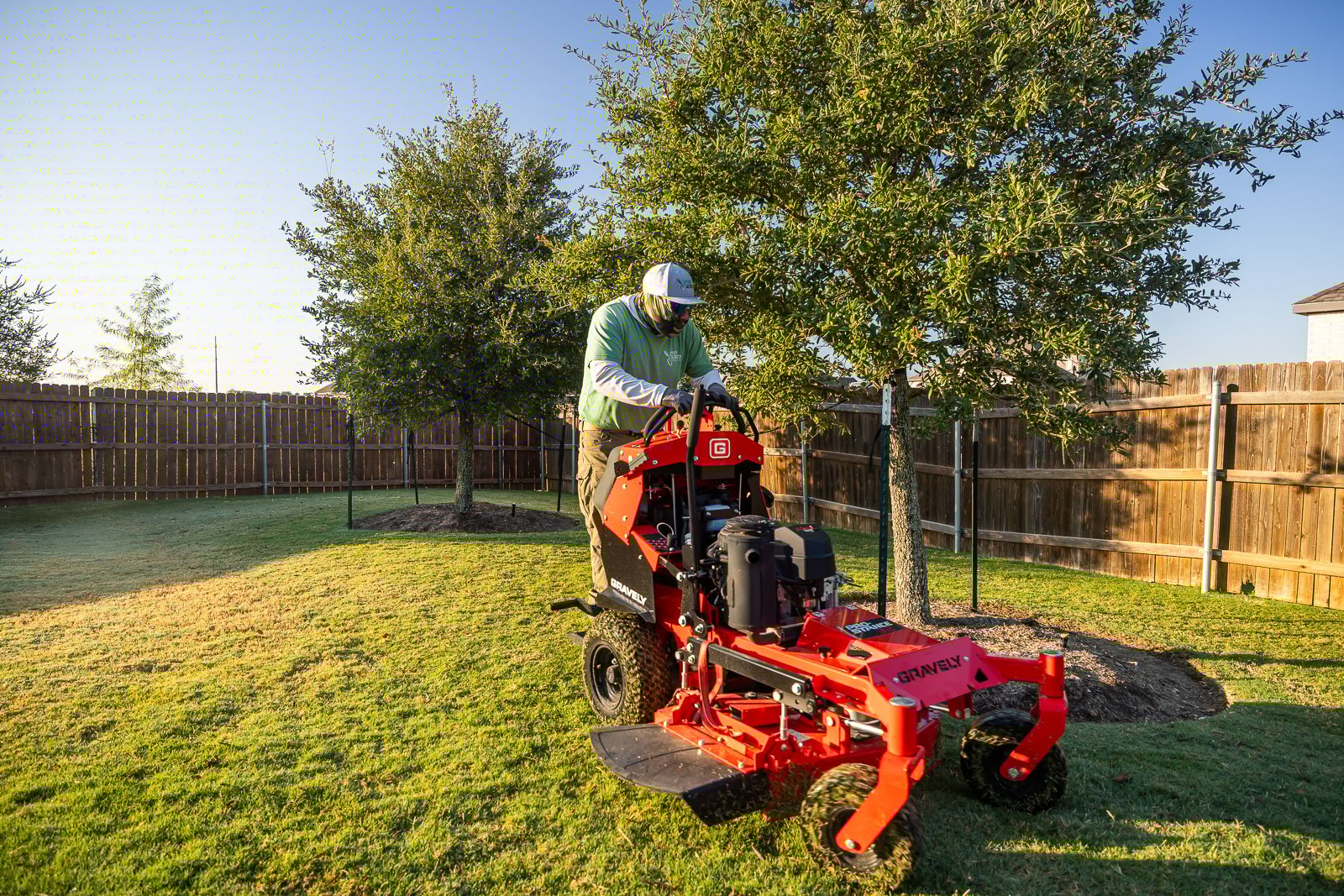
Spring is when your lawn starts coming back to life after winter. As temperatures rise, you can usually count on grass growth to pick up. For you, that means mowing becomes more frequent, and weeds can start taking off, too.
Consistent mowing helps keep the lawn uniform and can help prevent weeds from maturing and spreading. But if you scalp the grass trying to get ahead of the growing season, you can weaken the roots and leave it even more vulnerable to heat stress and weeds.
Spring is also one of the best times to start paying attention to irrigation.
After winter, your system may have clogged or damaged sprinkler heads, leaks, or uneven coverage. This is the best time to start inspecting and adjusting irrigation so you're not watering one part of the yard too much while another stays dry. Plus, you want that locked down before the heat waves of summer start to hit.
Fertilization can also be helpful in spring. Of course, timing here matters quite a bit. Central Texas lawns don't all have the same nutrient needs, and applying fertilizer too early or too late can create problems that you otherwise wouldn’t have had to deal with.
Your lawn's grass type, soil conditions, and overall health should help determine what it actually needs and when it needs it.

Summer: Heat, Drought, & a Dash of Lawn Stress
This is where Texas heat lawn damage becomes a very real concern.
Central Texas summers bring prolonged heat, limited rainfall, and plenty of pesky evaporation. During this part of the year, your lawn may be spending a ton of energy just trying to survive.
You might notice grass becoming dull, thinning, or even changing color. Those can be signs of drought stress, but they don't automatically mean your lawn just needs more water to quench its thirst.
In fact, overwatering can cause big lawn problems, too.
This is the part of lawn care that can feel overwhelming. Too little water can stress grass and weaken growth, while too much can contribute to shallow roots and disease.
That's why irrigation should respond to the real-life, evolving conditions of your lawn rather than running on the exact same schedule all summer and assuming it will work.
Our watering guidelines call for around 1½ inches per week during May through August, but rainfall, soil, sun exposure, wind, and the irrigation system all affect what your lawn actually needs you to do for it.
Of course, summer mowing matters, too. Keep your mower blades sharp and avoid cutting the grass too short, just like you did in the spring. Maintaining the appropriate height helps the lawn retain moisture and better withstand the heat.
Remember, not every brown patch is drought! Heat stress, irrigation problems, insects, and even disease can cause discoloration. That's one reason diagnosing the actual problem first – before treating – matters so much.

Fall: Recovery & Prep For What’s Next
Once the worst of the summer heat starts to ease, fall gives your lawn a much-welcomed chance to recover.
Unfortunately, you can’t put your lawn care on autopilot – that’s just the charm of Texas.
Fall is a good time for aeration when your lawn and property conditions call for it. Over time, soil can become compacted, making it harder for roots to access air, water, and nutrients. Core aeration helps loosen that soil and improve water absorption and root growth.
Fall is also when lawns may be overseeded depending on grass type and property needs. November is usually the ideal time for overseeding in Central Texas, but again, it’s completely up to your lawn’s needs.
Fertilization changes with the season, too. Winterizer applications are typically made in September to support root health and provide pre-emergent protection against winter weeds. Fertilization then pauses until spring growth resumes.
Remember your leaves, too. Regular leaf cleanup keeps debris from building up and smothering the lawn.
Winter: Please Don't Forget Your Lawn
Winter in Central Texas isn't exactly a guaranteed three-month lawn vacation – again, that’s part of our charm.
Most lawns slow down or go dormant, but warm spells can still bring some growth. Occasional mowing may be necessary, and irrigation may still be needed during dry stretches.
One common mistake is turning off irrigation completely in October and not thinking about it again until spring. Central Texas can still go long stretches without meaningful rainfall during the cooler months – and it often does. You don’t want to shut your irrigation off and forget it when you will (likely) need it a few times through the season.
A Few Telltale Signs Your Lawn Needs Extra Attention
Based on everything we’ve talked about, you probably feel like you need to become a lawn scientist to know when something looks off. Truthfully, you don’t have to go that deep. Just knowing what to look for (and teaming up with a team of lawn care partners you can trust) can be enough to keep your lawn happy and healthy.
Our advice? Keep an eye out for things like:
- Grass that's turning dull, brown, or yellow
- Thinning areas or bare patches
- Footprints that remain visible after walking across the lawn
- Grass blades that curl or feel crispy
- Standing water or consistently soggy soil
- Mushrooms or signs of fungal activity
- Sudden changes in lawn color or growth
- Increased weeds
- Signs of insects or pest activity
Keep looking out for these things, and remember, the important part is not to immediately assume you know the cause.
A struggling lawn can have multiple contributing factors. Heat, drought, irrigation issues, compaction, weeds, insects, disease, and nutrient deficiencies can overlap. That's where an evaluation from the pros can ultimately save the day!

FAQ: Central Texas Weather and Lawn Care
How does Central Texas weather affect lawns?
Heat, drought, rainfall, wind, and temperature swings can all affect lawn growth and stress. Central Texas lawns need seasonal adjustments to mowing, watering, fertilization, weed control, and other maintenance.
How do I know if my lawn is suffering from drought?
You can usually tell by its appearance. Dull or discolored grass, persistent footprints, curling blades, and crispy-feeling grass can indicate underwatering. Remember, though, similar symptoms can have other causes, so it's important to look at the whole picture and get an evaluation.
Should I water my lawn the same amount all year?
We don’t recommend it. Lawn watering needs change with the season and current weather conditions. Because of our changing weather, you’ll probably need to feel it out instead of setting it and forgetting it.
Can heat cause my lawn to turn brown?
Yes, absolutely. Intense Texas heat and drought conditions can cause lawn stress and discoloration. But brown or thinning grass can also be related to irrigation problems, insects, disease, weeds, or other issues.
When should I consider professional lawn care?
If your lawn continues to struggle despite regular mowing and watering. But also, if you find that you're spending more time trying to figure out what's wrong than actually enjoying your yard, a professional evaluation could save you stress and energy.
Keep Your Lawn Ready for Whatever Weather Texas Throws At It
Central Texas weather is going to do what it does, and we can’t stop it – but we can help you control how your lawn care adapts and evolves to manage it.
We’re here to help you with the ongoing and ever-changing work, like fertilization, weed control, insect and disease management, aeration, lawn renovation, irrigation, and beyond.
If your lawn has you constantly wondering what it needs next, let the experts help take some of the guesswork out of it. Contact our team to learn more about our lawn care services in Waco, Texas – so you can get back to actually enjoying your happy, healthy yard.