%20-%20copy.png)


On the hunt for a practical guide for understanding mulch? If you’re a homeowner who’s chasing great-looking, put-together flower beds – and the other benefits that mulch can provide – but aren’t sure where to start, you’re in the right place.
If you’ve lived in Central Texas for more than five minutes, you already know our weather doesn’t play around.
One week, it’s randomly pouring. The next week it’s 104°, and your soil looks like it’s auditioning for a role in a western desert movie. Between blazing sun, surprise cold snaps, heavy clay soil, and long dry stretches, your flower beds (and the rest of your yard, for that matter) take a beating.
That’s exactly why choosing the best mulch for Central Texas landscapes is so important. Most people think that mulch is only about curb appeal, when actually, it’s a way to holistically better your space through protection and plant health. It can also save you time, money, and energy – but we’ll go to that soon enough.
If you’re anything like the homeowners we work with in Waco and the surrounding areas, you want a yard that looks polished, but you don’t necessarily have the time you think it takes to babysit it.
You want your mulch done right the first time, and importantly, you want the best possible type of mulch for your yard, your goals, and to protect your investment.
Let’s talk types of mulch for Texas gardens and yards, what actually works here, and how to make a decision you won’t regret when the heat of July rolls around.
Table of Contents: What You’ll Find Inside the Blog
Mulching Flower Beds – It’s Not Optional in Texas
In milder climates, mulch is one of those helpful, nice-to-have things. But out here in Central Texas, mulch is essential.
Our all-too-familiar combination of intense heat, heavy sun exposure, drying winds, and stubborn soil means bare flower beds are going to struggle to stay alive. Without mulch, moisture evaporates quickly, weeds move in, and roots are exposed to temperature swings that stress plants out.
When we talked with Barry Marusak the other day (he’s our VP of Sales & Marketing), he reminded us that mulch retains moisture and helps guard against weeds.
That might sound straightforward – but here in Waco, moisture retention alone can be the difference between plants making it through August or not.
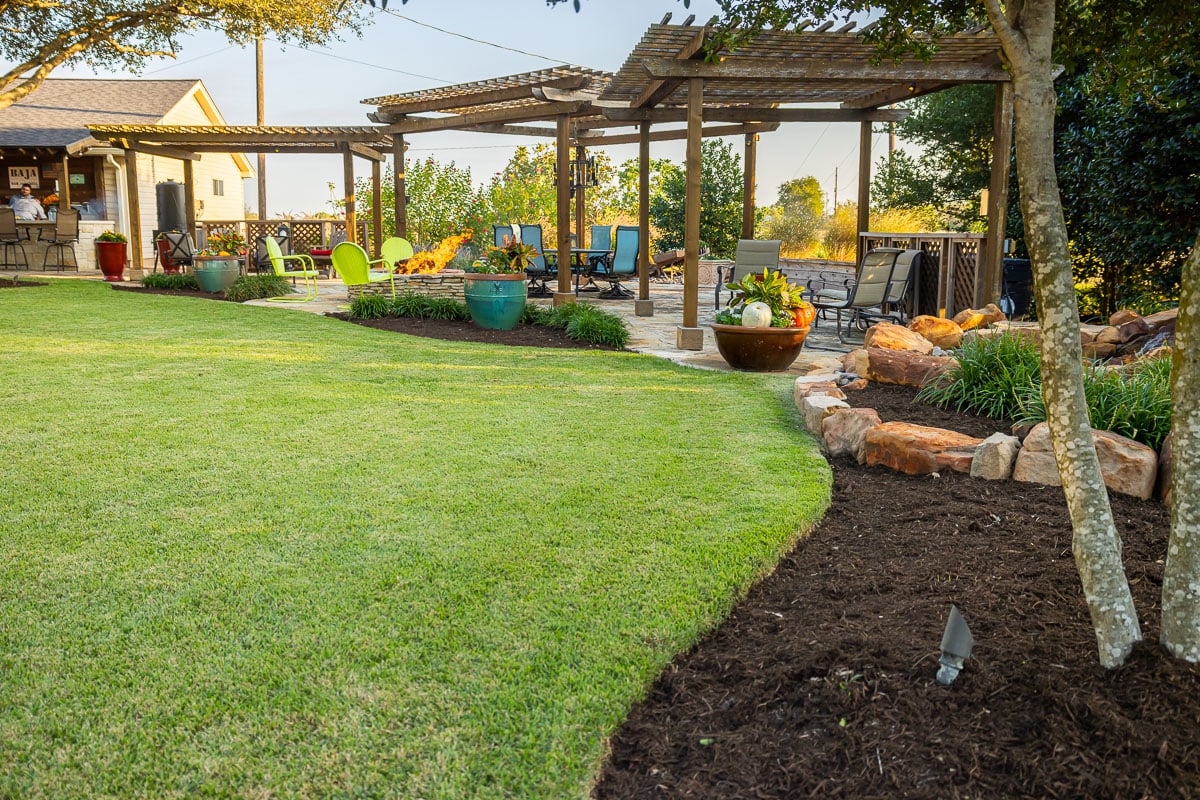
A Quick Look at What Mulch Does for Central Texas Beds
Need the rundown on why mulch matters? Here are the most important things to remember about mulch in Central Texas:
- Locks in moisture during long, hot stretches
- Shields roots from extreme surface heat
- Reduces weed growth (which competes for water)
- Improves soil over time (with the right material)
- Creates clean, finished curb appeal
If you’ve ever driven through Woodway or Hewitt and noticed the stark difference between crisp, defined beds and dry, patchy ones, the answer is usually mulch.
Obviously, we can’t speak for yards we don’t know (we can’t tell you what struggles they’re facing). But if you see a patchy flower bed sans mulch, you can usually assume it would have performed much better with a healthy heaping of mulch.
The Most Common Types of Mulch for Texas Gardens
Here’s the most important thing we want you to take away from this guide – not all mulch is created equal. That’s true anywhere, but especially here in Texas.
Over the years, we’ve seen what works long term and what causes more problems than it solves. Here’s a breakdown of common organic mulch options and inorganic materials homeowners usually consider.
Native Hardwood Mulch (Our Go-To Recommendation)
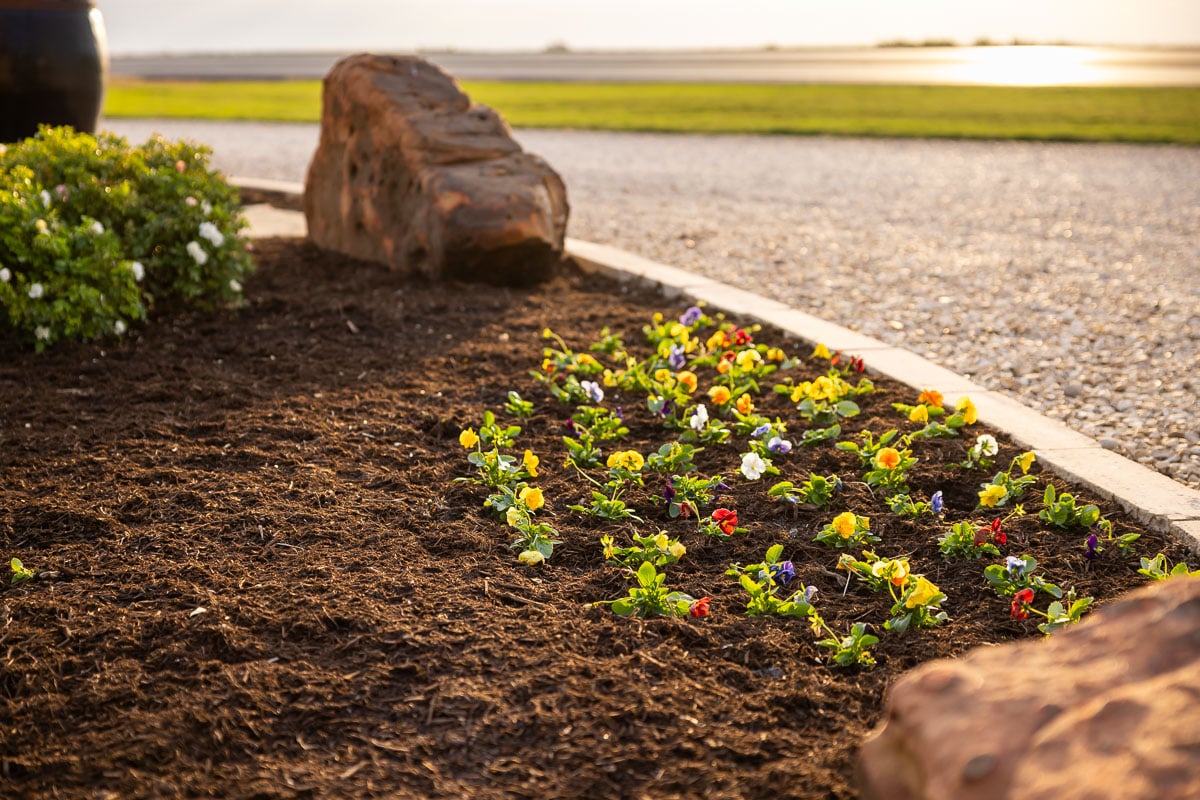
We consider this the gold standard for Central Texas landscapes. Native hardwood mulch is derived from natural wood sources (not construction waste), and it breaks down gradually over time.
As Barry puts it, “We typically only install native hardwood mulch. Dyed mulches are terrible for the soil.” Here’s a peek at why we recommend it:
- Excellent moisture retention
- Suppresses weeds effectively
- Breaks down into compost, feeding the soil
- Natural, rich appearance
- Improves soil structure over time
In our Central Texas clay-heavy soils, that last benefit matters more than people realize. As hardwood mulch decomposes, it contributes organic matter, and that helps to loosen compacted soil and support healthier root systems.
For homeowners wanting both beauty and something that’s going to be functional, native hardwood mulch consistently performs the best out of most options.
Dyed Mulch
We figured we had to list this even though here at Green Ackors, we don’t use it. Not sure what dyed mulch is? Trust us, you’ve seen it – bright red or dark black mulch in big-box store bags.
While it might look fun at first (or even give your yard a nice, bold pop of something), dyed mulch often comes from recycled wood products and can contain unknown materials. The dyes themselves don’t improve plant health, and over time, the color fades pretty unevenly.
The biggest issue is that it doesn’t contribute to soil improvement the way natural hardwood does. In Central Texas, where soil health already needs support, dyed mulch simply isn’t the strongest long-term choice. And when you’re talking about protecting your investment and spending your resources wisely, it’s tough to put this on the must-consider list.
Pine Bark
Pine bark is a bit lighter and can look lovely in certain landscape designs. It drains well and breaks down somewhat quickly.
That said, it does have some downsides we think every homeowner should be aware of:
- It’s lighter, so it can shift more easily during heavy rains
- It may need refreshing more frequently
- It doesn’t always provide the same dense weed barrier as hardwood
In windy spring storms (and you know we get plenty), lighter materials can migrate out of beds faster than you might like.
Cedar Mulch
Cedar has a lovely scent and natural insect-repelling properties. It holds up reasonably well in heat and resists decay longer than some other wood options.
The tradeoffs that do exist aren’t a huge deal, but we do think you should know what they are:
- It decomposes more slowly, so it contributes less to soil improvement
- It can be more expensive (which may impact your budget)
- It may not retain moisture as effectively as dense hardwood mulch
It’s not a bad choice by any means, but for overall performance in Central Texas conditions, hardwood still typically wins.
Compost
Compost is technically more of a soil amendment than a traditional mulch, but it’s worth mentioning because it enriches soil quickly and improves plant health significantly.
That said, it does have its pros and cons, and we think it’s important you know what those cons are. For example:
- It doesn’t suppress weeds as well on its own
- It breaks down very fast
- It often needs to be paired with another mulch layer
Compost is excellent for feeding the soil, so it’s not a bad consideration. But it’s not usually the standalone solution for homeowners looking for the answer to low-maintenance beds.
Rubber Mulch (Hint: Specialty Use Only)
A few things about rubber mulch right off the bat – rubber mulch is inorganic and does not decompose.
When we use rubber mulch at Green Ackors, it’s occasional and mostly installed around playground areas for safety purposes. (It’s a great extra cushion for kiddo falls and stays in place despite the chaos of playtime).
But…would we consider it for a homeowner’s flower beds? Not usually – and if we did, it would be for a specialty case. And that’s because it t doesn’t improve soil, doesn’t break down into nutrients, and can hold heat. So, for plant health in Central Texas landscapes, it’s not usually ideal.
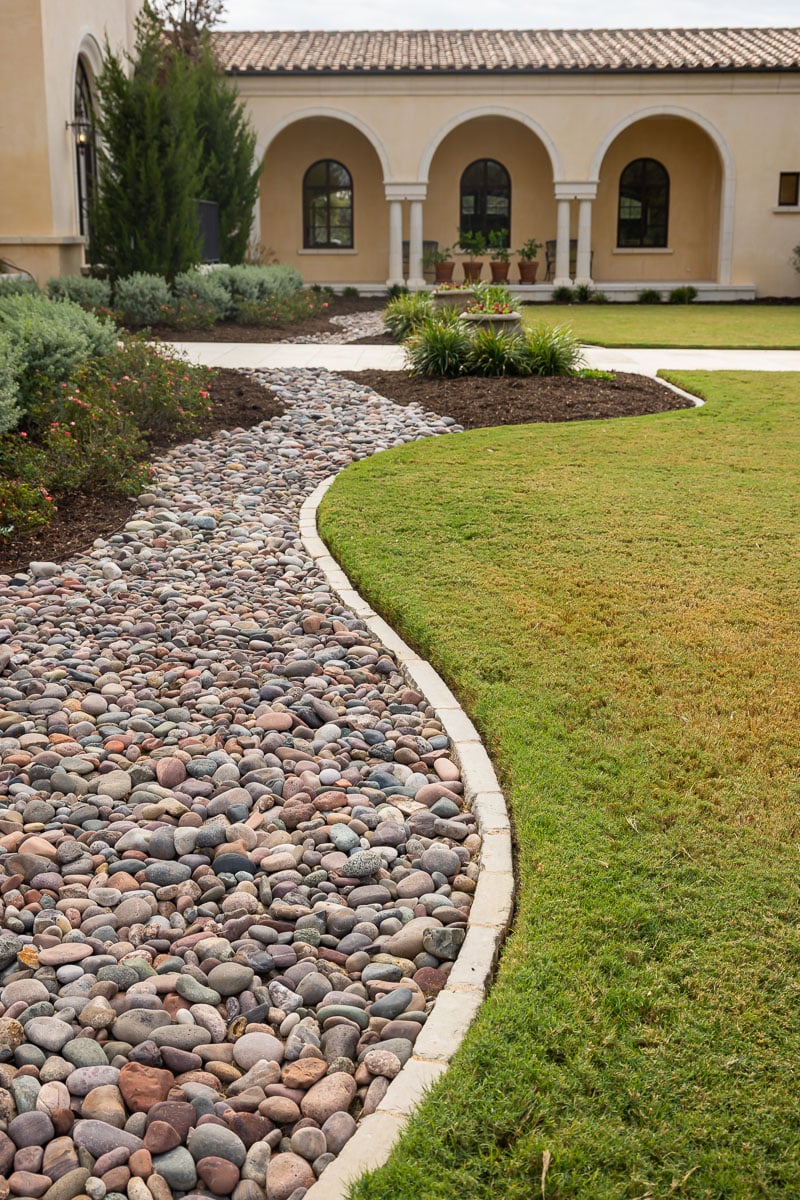
Rock Mulch
Rock or gravel is popular in drought-tolerant designs, but it does come with tradeoffs (like all options do).
In our Central Texas summers, rock absorbs and radiates heat – that heat can stress plant roots and dry out soil faster, which is sort of the opposite effect you were hoping for with a mulch.
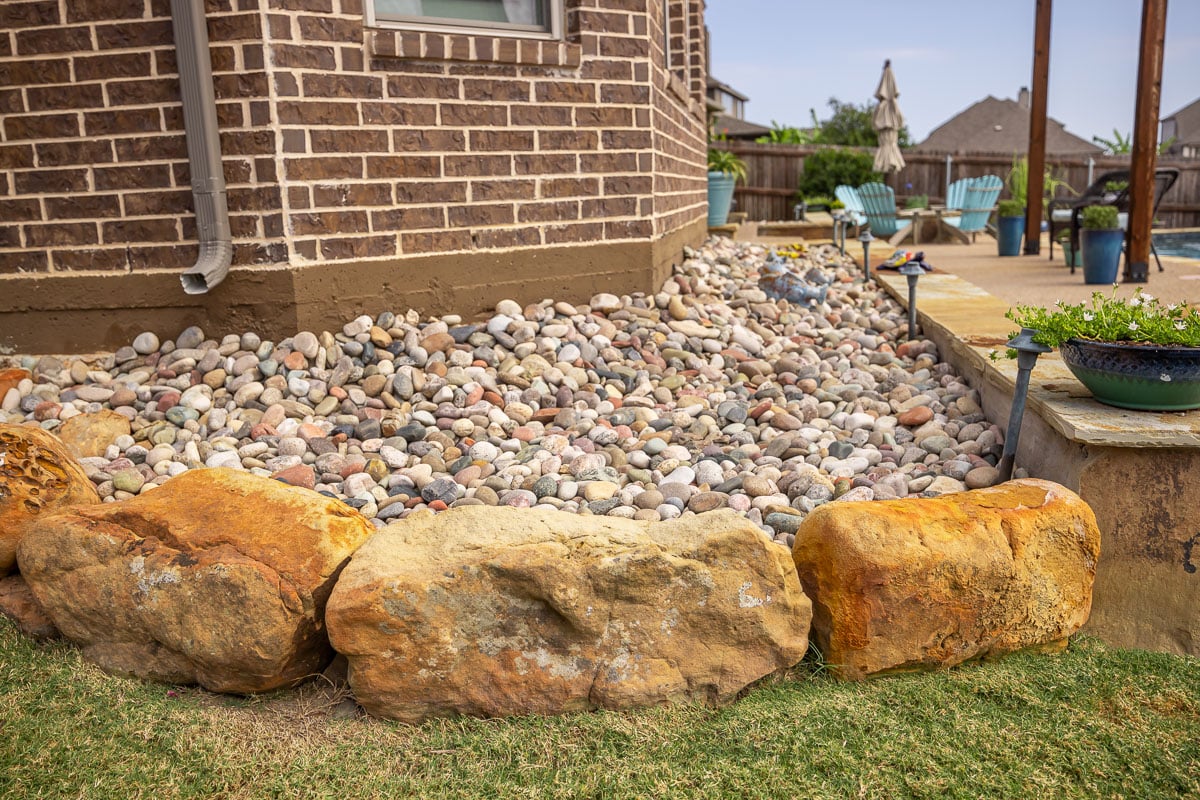
It’s true that rock doesn’t decompose and can be much lower maintenance in most settings, but it doesn’t contribute to soil health and can create heat pockets in already hot climates.
Our verdict? For many traditional flower beds, it’s not the best mulch for Central Texas conditions.
Best Mulch for Moisture Retention and Weed Suppression
The best mulch for your area is going to depend on your goals, the vision you have for your yard, your budget, and your ideal maintenance schedule. That said, if your top priorities are similar to these:
- Using less water
- Reducing weeds
- Protecting plants during extreme heat
The clear winner is a thick layer of native hardwood mulch.
Usually, 2-3 inches of this type of mulch will do the trick. That sounds thick, but thickness matters here. If the layer of mulch is too thin, weeds can push through and thrive, taking over your beds. But if you lay it on too thick, you can suffocate your roots.
That 2-3 inch range provides insulation, moisture retention, and strong weed suppression without harming plants.
Organic vs. Inorganic Mulch: What’s Better for a Low-Maintenance Yard?
Let’s talk honestly about maintenance, because that’s what most busy homeowners care about. Sure, you want your yard to look beautiful and function – but at what cost? Your time matters, and whether you’re handling maintenance on your own or have a team handling it for you, you don’t want your mulch maintenance to become a huge time suck or expense.
Organic Mulch (Think Hardwood, Cedar, & Pine)
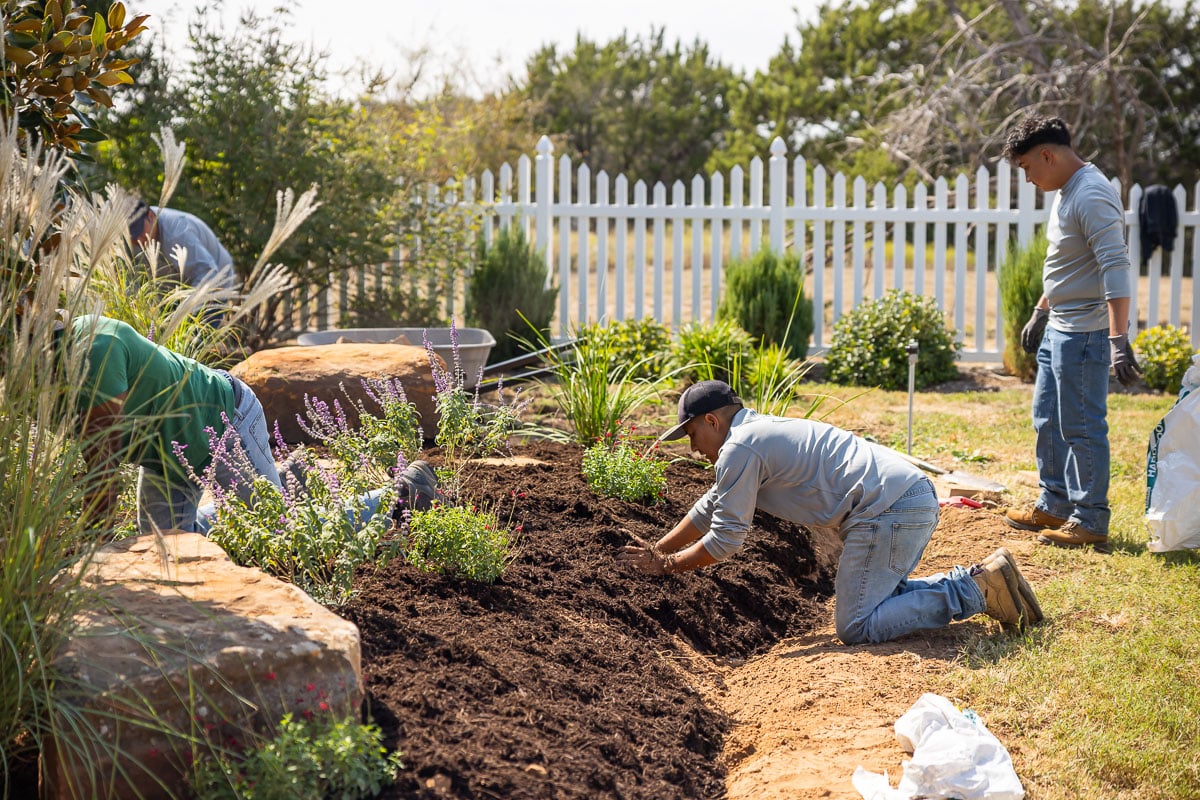
Organic options can improve your soil over time, help retain moisture, support plant health, create a beautiful and natural appearance, and suppress weeds.
But organic mulch does need refreshing about once every year because it gradually decomposes.
Still, that decomposition is actually a big benefit for your soil. As it breaks down, it feeds your soil and improves long-term plant performance.
Inorganic Mulch (Think Rubber & Rock)
When it comes to inorganic choices, you have the benefits of less frequent replenishment, speciality uses, and the major upside that it won’t break down over time.
Still, that inorganic mulch isn’t going to improve your soil, it can trap and radiate heat (which can damage your plants), and it’s ultimately harder to modify later.
Our hot take? If homeowners want low maintenance without sacrificing plant health, organic mulch tends to be the better long-term solution.
The Must-Know Mulching Tips for Central Texas Homeowners
We’ve got the basics of must-know mulch types down – and you should have a good idea of what might work best for your space. Now, let’s get into real-world mulching tips that can make or break how your mulch project turns out.
Always Expect to Use More Than You Think
This is one of the biggest mistakes we see.
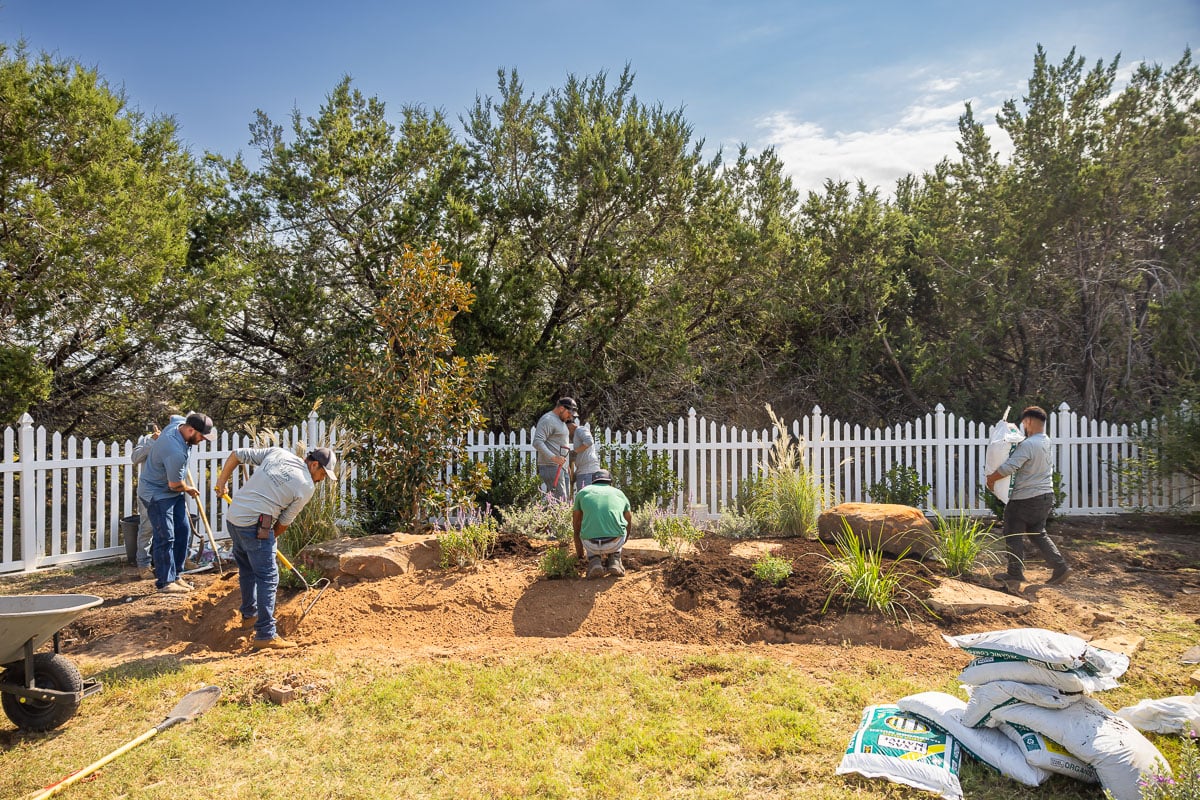
As Barry reminded us, “It is going to take more mulch than you might think. We see a lot of people get bags of mulch from the store, then have to go back and get more.”
If you’ve ever loaded up a cart at a big-box store only to realize halfway through the job that you’re short, you’re not alone. Bulk mulch installations tend to create more consistent coverage and fewer surprise trips.
Refresh Once Per Year (At Minimum)
Our general rule of thumb is to refresh mulch once per year.
That’s because over time, mulch:
- Blows out of beds
- Breaks down naturally
- Settles and thins
There’s usually a debate on the best time to mulch. Some homeowners prefer refreshing twice a year (typically Spring and Fall) to keep beds looking sharp year-round. If curb appeal matters (and let’s be honest, it does), a spring refresh can completely transform your landscape before the growing season kicks in.
Spring vs. Fall Mulching
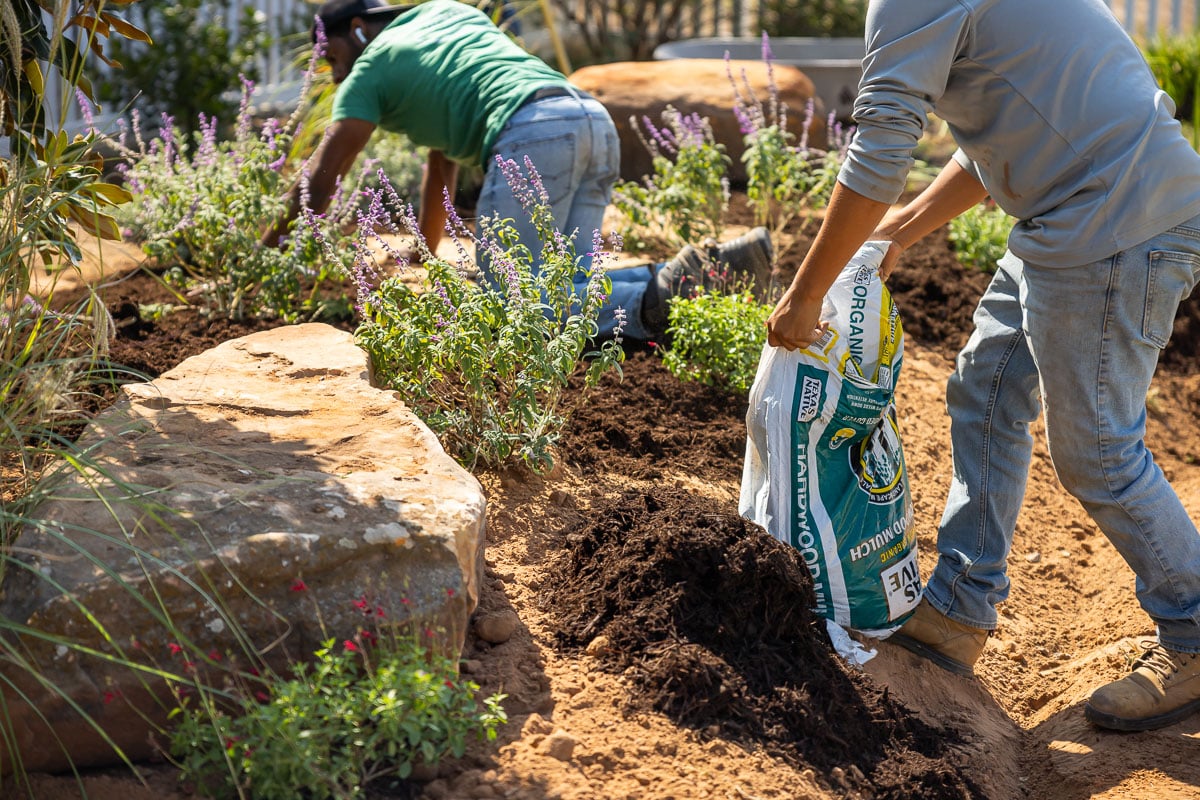
Deciding when to mulch has its own list of benefits and disadvantages. If you’re wondering if you should mulch in the Spring or mulch in the Fall, think about these points for seasonal cleanup:
Spring mulching:
- Locks in moisture before peak heat
- Suppresses spring weed growth
- Gives beds a clean, finished look
Fall mulching:
- Protects roots during temperature swings
- Rebuilds the thickness lost over the summer
- Keeps beds looking maintained through winter
In Central Texas, both make sense for seasonal cleanup depending on your goals. And like we said before, you can always mulch twice a year to make sure everything looks good and functions right throughout the year.
Don’t Pile Mulch Against Trunks
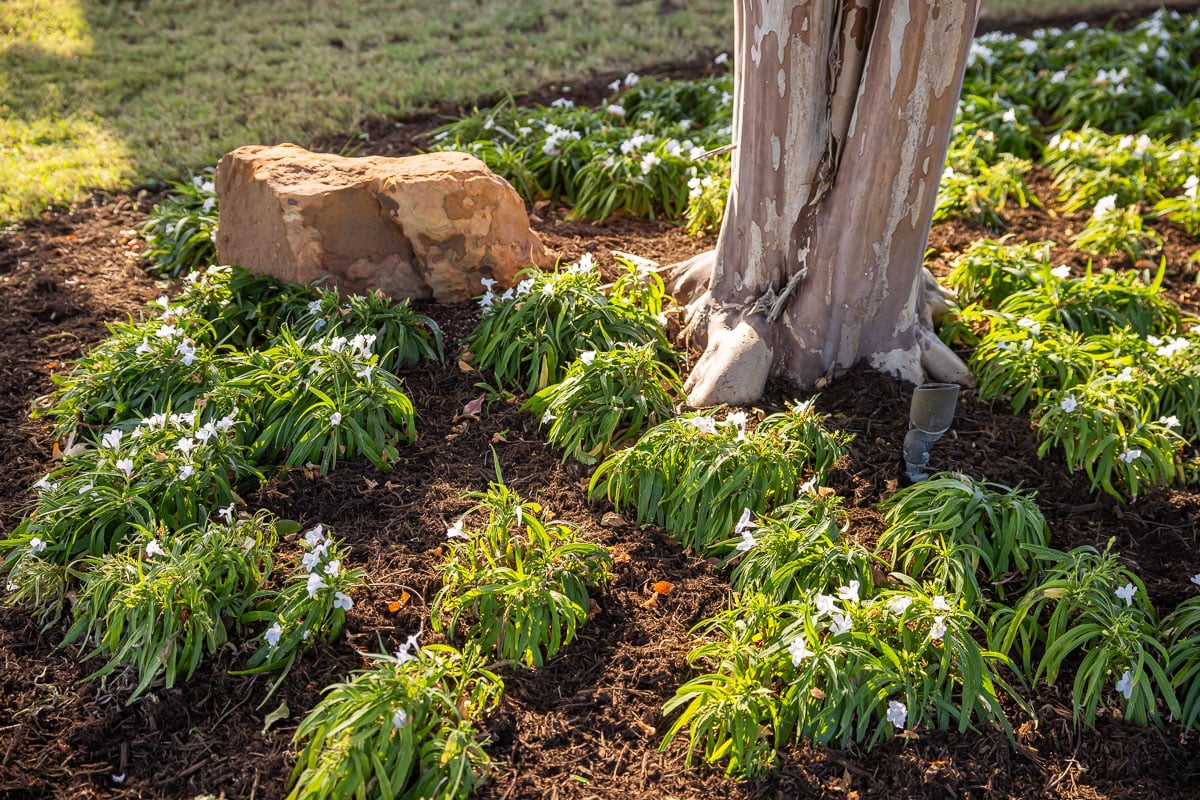
A quick but important reminder to avoid “mulch volcanoes.” Mulch should sit around plants, not climb up their stems or tree trunks. Direct contact traps moisture against the bark, and that leads to rot and pest issues.
Keep a small gap around trunks and stems for airflow. It’s true – there are right and wrong ways to mulch.
Making the Right Mulch Choice for Your Texas Yard
You shouldn’t have to experiment with three different mulch types just to figure out what works in Waco. The goal isn’t just to “cover dirt” and look pretty; it’s to choose the best mulch for your space to protect your investment and sharpen up your curb appeal.
Mulching flower beds in Texas should be part of a long-term strategy for plant health, water efficiency, and maintaining the look of your home in one of the toughest climates in the country.
If you’re unsure how much mulch you need, whether your beds are properly prepped, or how to maintain them through the seasons, that’s where experience matters. Our team has worked on landscapes all across Waco and the surrounding Central Texas communities for years. We know what holds up when July hits triple digits – and we also know what doesn’t.
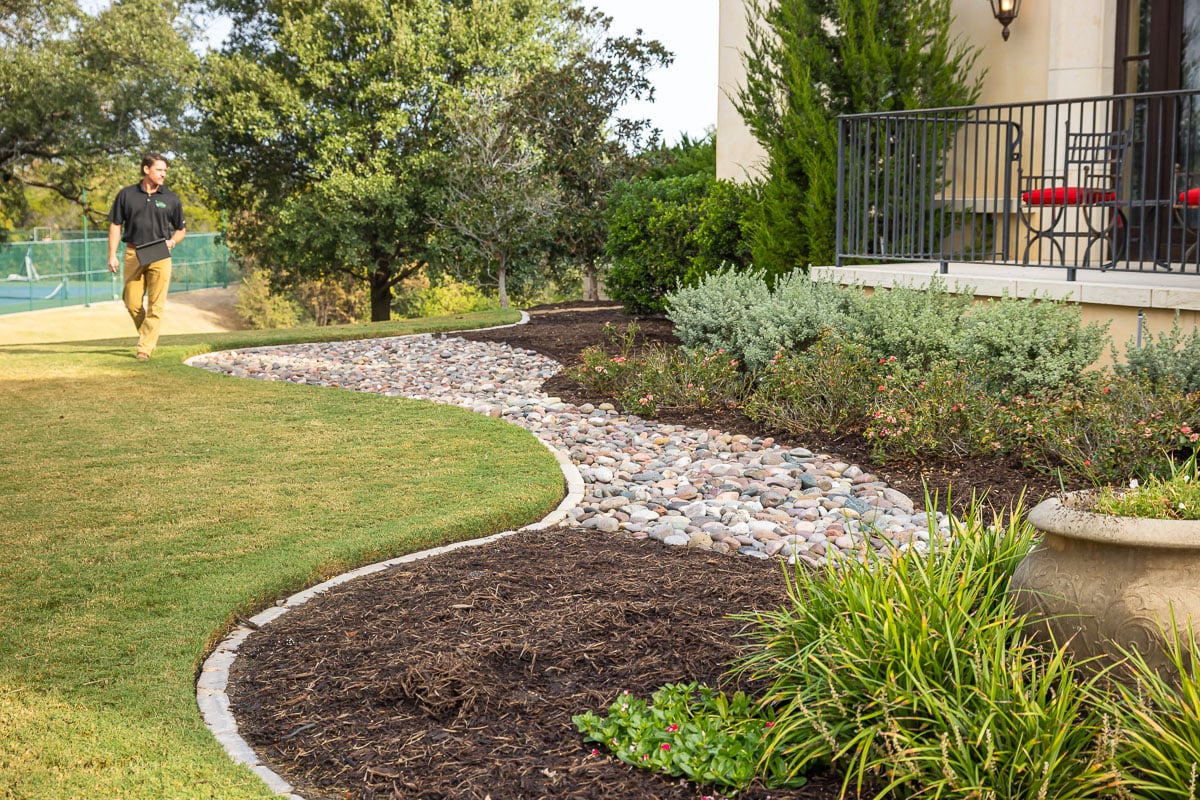
Around here, mulch isn’t just decoration; it’s a way to protect your investment. If you’re ready to discuss mulch, we’re here to help. Consult with our team today to get your mulch project on the books.