%20-%20copy.png)


Raise your hand if you've ever experienced what we're about to describe.
You walk outside, look around your yard, and suddenly everything (every tree, shrub, and plant) has grown tall and bushy all at once.
OK, you don't have to actually raise your hand – but just knowing that you've experienced it is enough, right?
If you, too, have experienced that sudden onset of "that shrub is WAY bigger than it used to be!" you've probably also wondered when and how to set aside time to trim and prune the plants in your space.
Which, undoubtedly, leads to questions like:
- Am I supposed to trim this right now?
- Or… do I wait?
- Did I already miss the prime-time prune and trim time?
If you’ve ever felt overwhelmed trying to figure out when to trim trees in Central Texas or how to properly prune shrubs without damaging them, you are the furthest thing from alone.
Tree trimming and shrub pruning are one of those landscape tasks that seem straightforward until you start really thinking about it and researching the whole topic. Then, you find that every article or expert says something different.
You also might find that every plant has different rules, and a single incorrect cut could end your tree's growth cycle. It's no wonder you're putting down the trimmers every time you pick them up.
We're here to share really good news: it really doesn't have to be as complicated as everybody makes it.
With the right timing and a few simple pruning principles to live by, you can help your trees and shrubs stay healthier, safer, and far more attractive year-round.
And in a climate like ours in Central Texas – where heat, drought, storms, and rapid growth all play a role – proper maintenance makes a huge difference in the longevity of your landscape.
So, let's do this.
Let's walk through seasonal pruning in Texas, explain the difference between tree trimming and shrub pruning, and cover common mistakes so we can help you decide when it’s best to pick up the shears and when it might be time to call in a professional.
Table of Contents: What You'll Find Inside This Guide
- Why tree trimming and shrub pruning are important
- Is there a difference between tree trimming and shrub pruning?
- The best time to trim trees in Central Texas
- The best time to prune shrubs in Texas
- Seasonal pruning tips for every Central Texas property owner
- The basic tree and shrub pruning techniques
- Common pruning mistakes homeowners make
- Why Central Texas Landscapes Need Special Attention
- When It’s Best to Hire a Professional
- FAQ: Tree Trimming and Shrub Pruning in Central Texas
- Partner with Green Ackors for Landscape and Tree Maintenance Services in Waco
Why Tree Trimming and Shrub Pruning Matter for Your Texas Landscape
A lot of homeowners think trimming their plants, trees, and shrubs is all about how everything looks.
To their credit, keeping your landscape neat absolutely improves curb appeal. But proper pruning does much more than make things look prim and proper.
Regular trimming is one of those mandatory maintenance things that helps encourage healthier growth, improve airflow through the plant, reduce disease risk, and remove damaged or hazardous branches before they become a big problem.
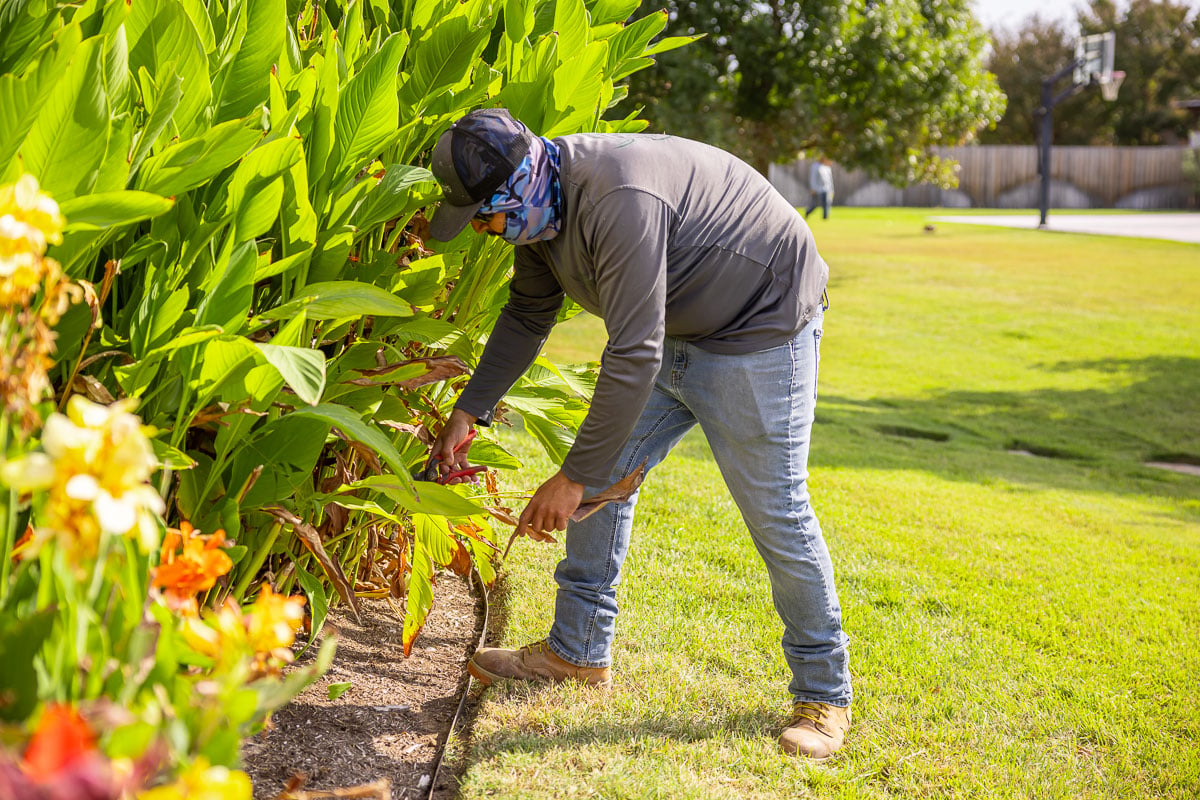
For trees specifically, pruning can help:
- Reduce storm damage risk
- Prevent limbs from interfering with roofs or power lines
- Improve structural integrity
- Encourage healthier long-term growth
For shrubs, proper pruning helps maintain shape, encourages fuller growth, and prevents plants from becoming leggy, overgrown, or difficult to manage.
In our area, where long summers and unpredictable weather can stress plants quickly, routine maintenance for trees and shrubs often makes the difference between a landscape that lasts a long time and one that constantly struggles.
Tree Trimming vs. Shrub Pruning: What’s the Difference?
People often use the terms trimming and pruning interchangeably, but to be technically correct, it's actually tree trimming and shrub pruning – and surprisingly enough, they're a little different.
Let's start with tree trimming.
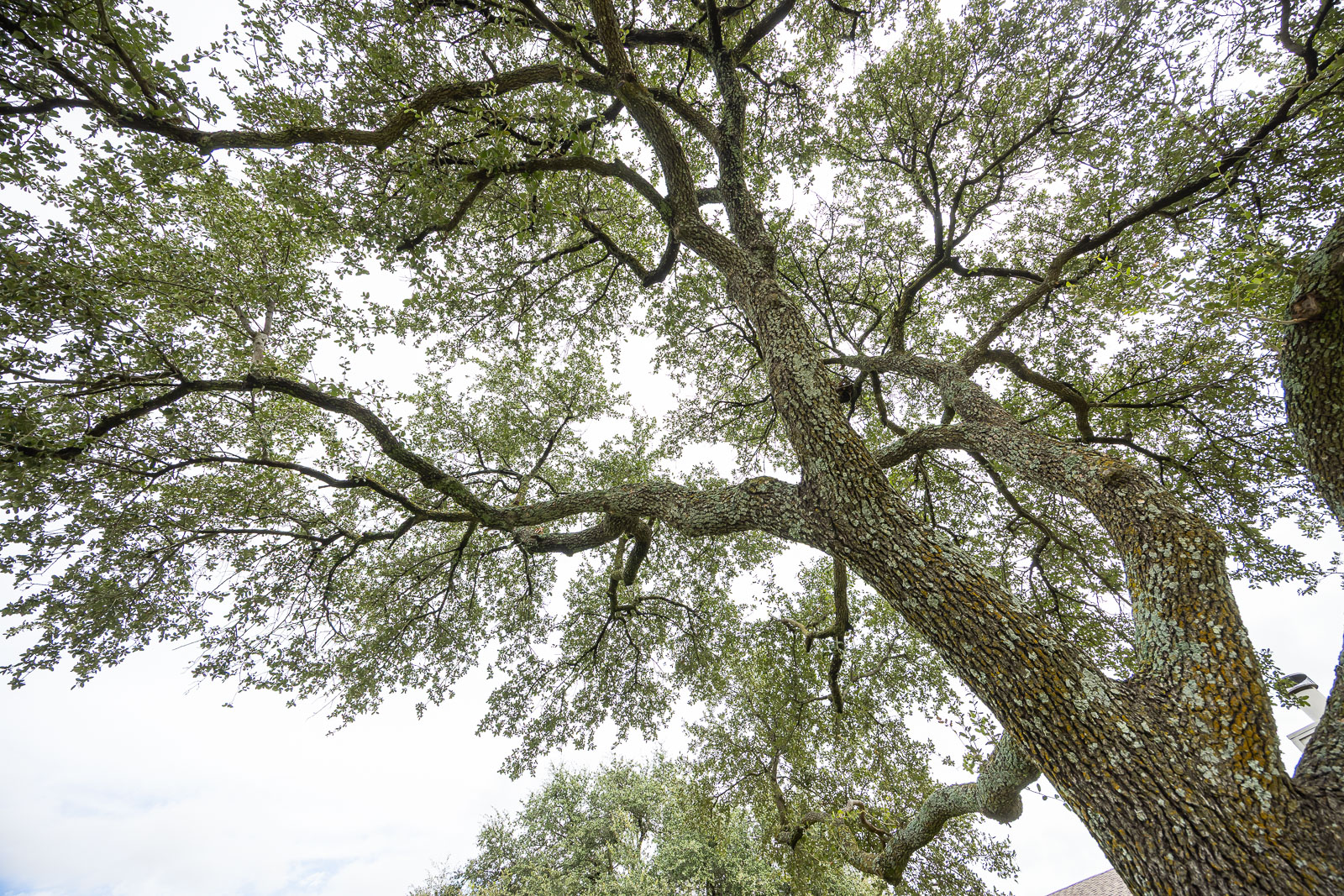
Tree trimming usually focuses on larger structural growth. The goal is often safety, health, and managing the overall canopy of the tree. This may include removing dead limbs, thinning crowded branches, or lifting branches away from structures and walkways.
Then, we've got shrub pruning.
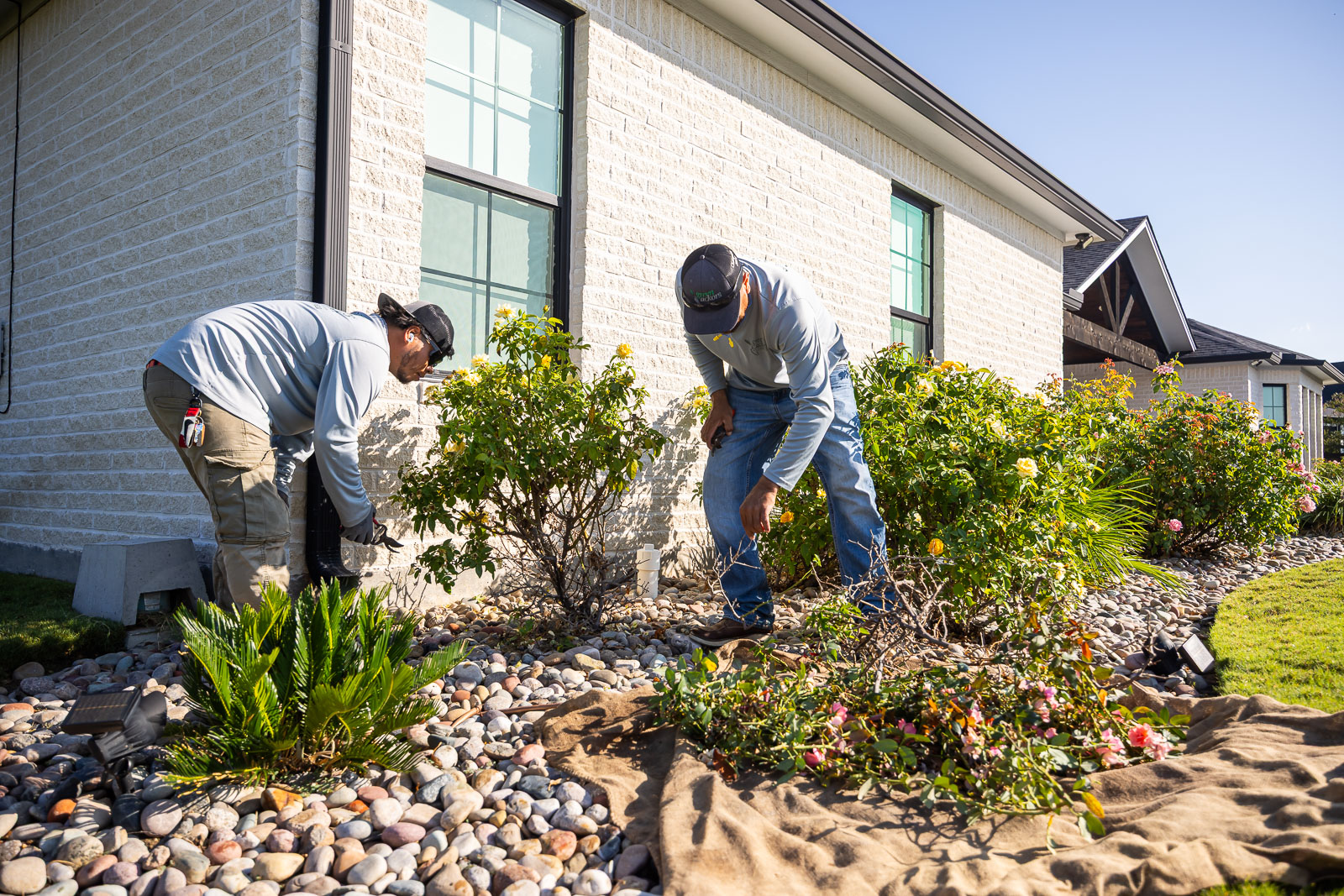
Shrub pruning, on the other hand, is usually more focused on shaping, growth control, and encouraging dense, healthy foliage.
Shrubs usually require more frequent maintenance than trees because they grow faster and are part of the visual structure and layering of the landscape design itself.
The important thing to understand is that both trimming and pruning require proper timing. Cutting too much, or pruning at the wrong time of year, can stress a plant out and impact its potential for healthy growth.
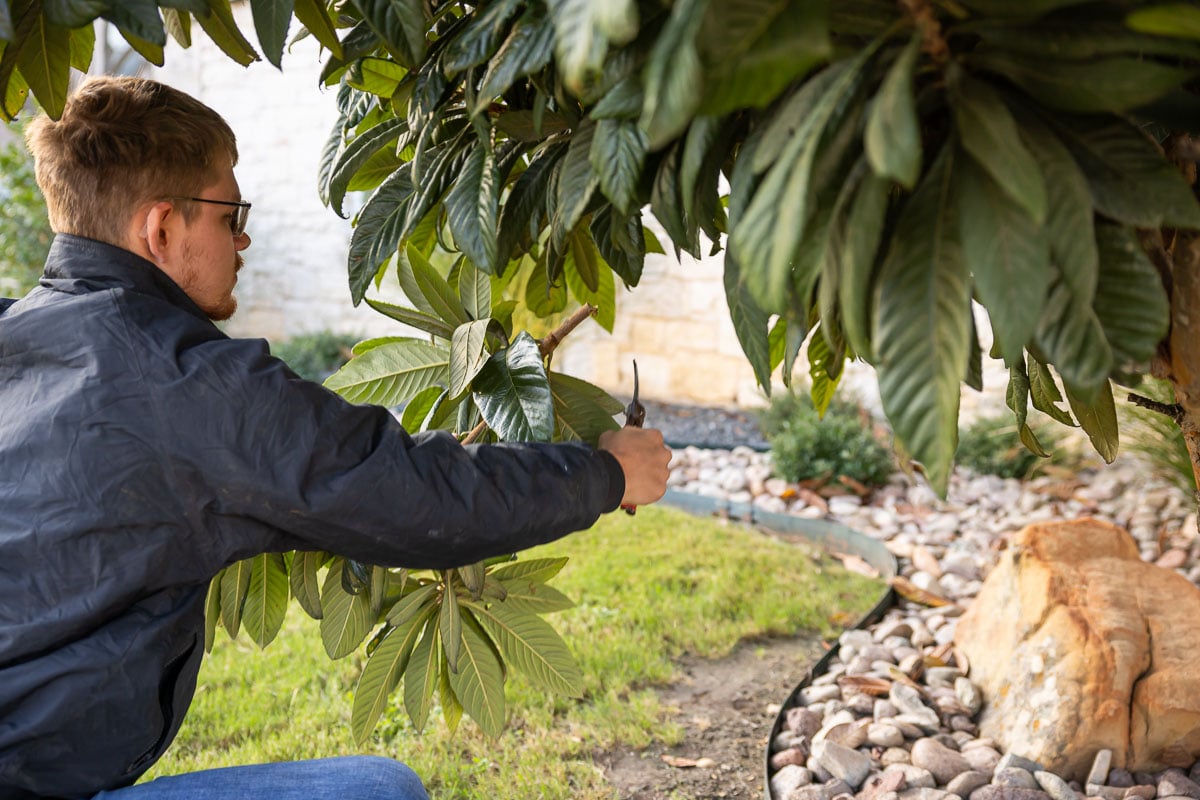
A Trimming Timeline: When to Trim Your Trees in Central Texas
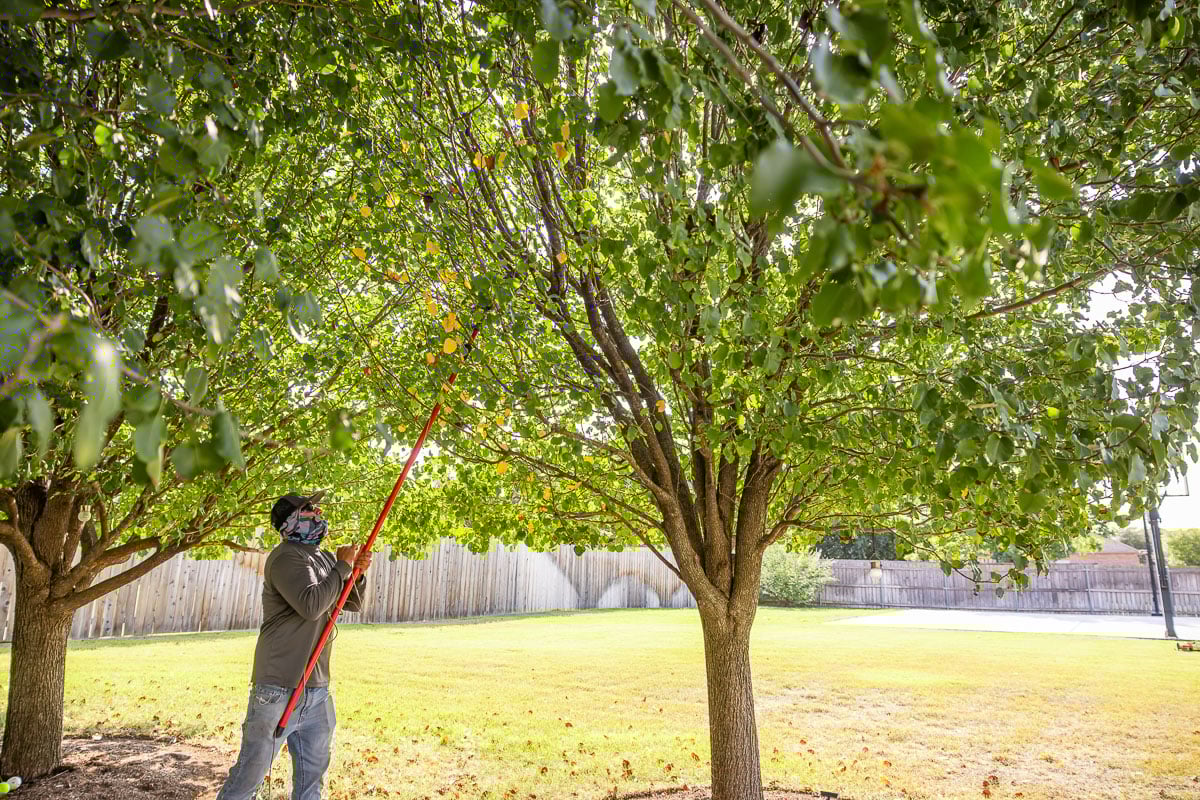
One of the biggest questions homeowners ask is all about timing: when should I trim my trees?
This is where it gets sticky online with a million different answers, because the answer depends partly on the type of tree.
But if we can opt for just generally speaking? The best times for tree trimming, as a general rule, are late winter through early spring for major cuts and trims.
During this period, many trees are dormant or just beginning to wake up from winter. That makes it easier to:
- Spot structural issues
- Reduce stress on the tree
- Encourage healthy spring growth
- Minimize disease and insect problems
Winter pruning is especially common for your typically shade trees, like your oaks and elms.
One of the reasons timing matters even more in Texas is that certain diseases (like oak wilt) can spread pretty aggressively during warmer seasons. Improper pruning timing on oak trees can increase their vulnerability to oak wilt.
That is why many professional tree trimming services in Central Texas recommend avoiding major oak pruning during peak spring and early summer months unless absolutely necessary.
Of course, damaged or hazardous branches should be taken care of immediately – even if it's not in prime trimming season. Storm-damaged limbs, cracked branches, or dead wood can become safety hazards, so they need to be dealt with when they happen, no matter what season they happen in.
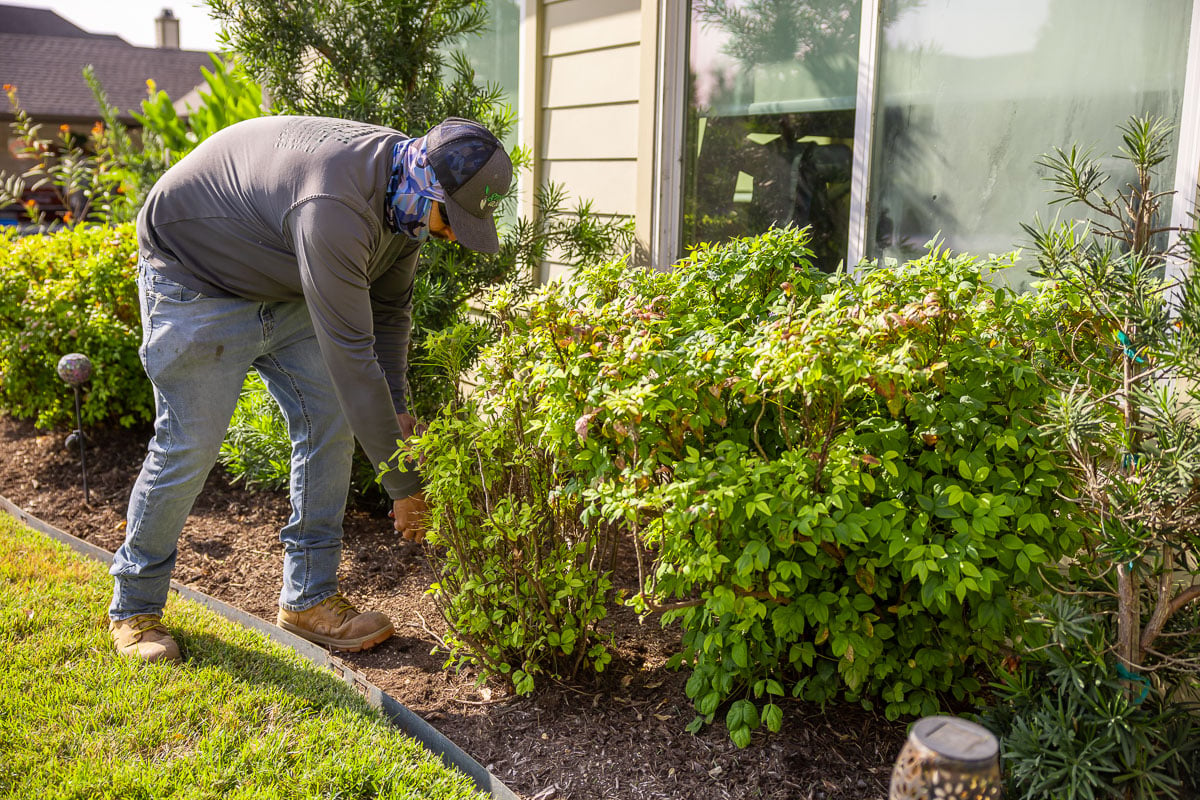
Prime Pruning Time: When to Prune Shrubs in Texas
Shrubs follow a slightly different schedule than trees, but we'll speak generally just like we did with our tree trimming timing.
The best timing for shrubs usually depends on:
- Whether the shrub flowers and
- When the shrub flowers bloom
For many non-flowering shrubs, light pruning can happen throughout much of the growing season to maintain shape and size. But we always say that more significant pruning is often best during late winter or early spring before heavy new growth begins.
Flowering shrubs require a little more attention to timing.
- Spring-blooming shrubs should generally be pruned shortly after they finish flowering. Pruning too early may remove the buds that create next season’s blooms.
- Summer-flowering shrubs are often pruned in late winter or early spring since they bloom on new growth.
Pruning shrubs at the wrong time can accidentally eliminate an entire season of flowers, so you'll want to double-check pruning times for those flowering shrubs.
Our Top Seasonal Pruning Tips for Central Texas Landscapes
Because Central Texas experiences intense heat, the occasional hard freeze, and random but expected periods of drought, our "seasonal pruning" schedule requires a little extra strategy.
Spring
Spring is one of the busiest growth periods for landscapes in Waco and our surrounding communities. Light shaping, removing winter damage, and preparing plants for healthy growth are all common during this season. But remember, aggressive pruning during late spring can sometimes stress plants as temperatures begin climbing rapidly.
Summer
Summer pruning should generally be limited. Think about it, during extreme heat, plants are already working hard to conserve moisture and survive stressful conditions. Heavy pruning during high temperatures can expose sensitive branches and foliage to sunscald or drought stress.
This is usually the season for light maintenance only, like:
- Removing dead growth
- Managing small problem areas
- Addressing storm damage
Fall
Fall is often a transitional period for landscapes. While some light pruning is acceptable, major pruning is usually avoided because it can stimulate new growth right before cooler temperatures arrive. Fresh growth may not have enough time to harden off before winter weather.
Winter
Winter is what we usually consider the most ideal for structural tree pruning and more significant reductions on many dormant plants. Without heavy foliage in the way, it is easier to evaluate tree structure and make cleaner, healthier cuts. This is when we try to handle our large trimming maintenance projects, too.
Basic Tree and Shrub Pruning Techniques
Does being a certified arborist help with pruning and trimming? Sure. Is it required? Not even a little bit. To be a better pruner and trimmer, you just need to follow a few simple principles.
- Always use sharp, clean tools. Dull blades can tear branches instead of creating clean cuts, which increases stress and disease risk.
- Avoid removing too much at once. Over-pruning is one of the fastest ways to weaken a plant.
- It is better to prune gradually over time rather than cutting aggressively all at once.
- Proper cuts matter, too. Branches should typically be cut just outside the branch collar, the slightly swollen area where the branch connects to the trunk or larger stem. Cutting too close or leaving long stubs can interfere with healing.
- Resist the urge to "top" trees. By tree topping, we mean dramatically cutting back the upper canopy, which creates weak regrowth, increases disease vulnerability, and permanently damages the natural structure of the tree.
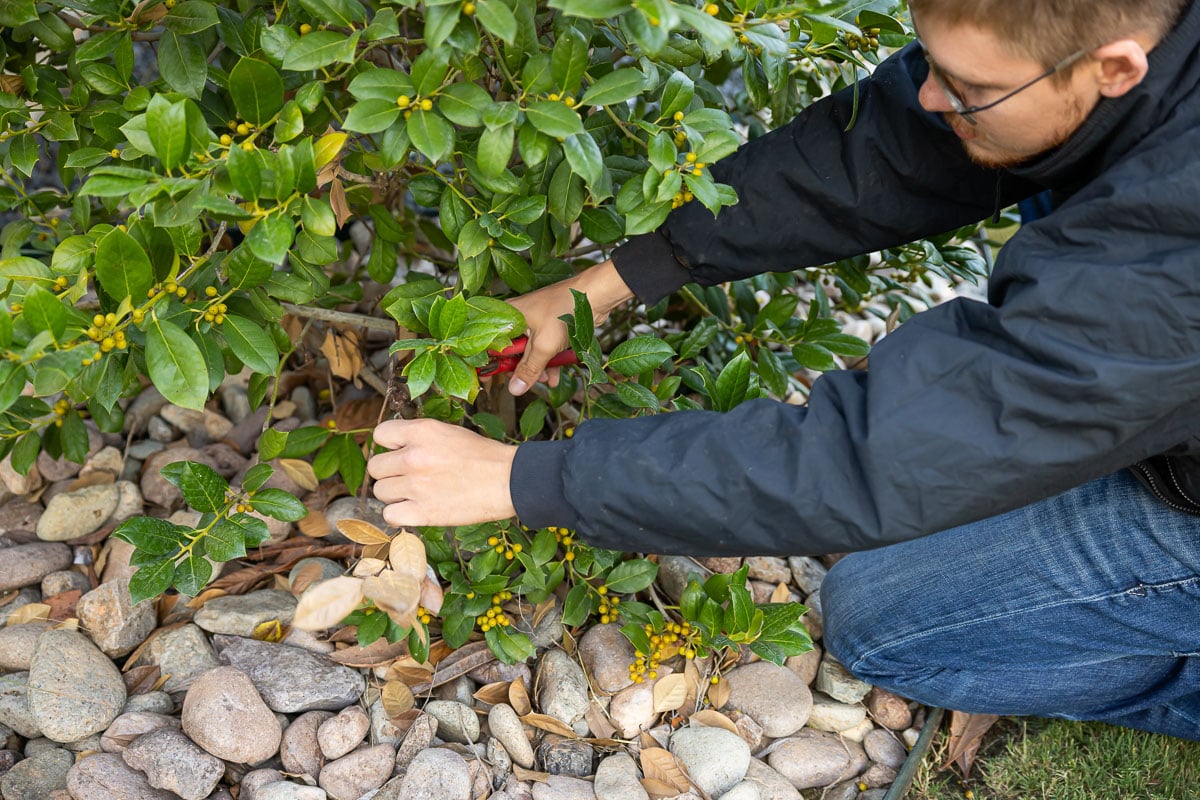
The Most Common Pruning Mistakes Homeowners Make
Like with anything, a lot of landscape frustration starts with good intentions. Maybe you want your yard to look better, so you do a heavy trim and prune session – but you do it at the wrong time of year.
Now? Your plants are struggling and hanging on by a thread.
Over the years, we've seen a lot of very normal trimming and pruning mistakes. Here are a few of the most common (and easiest to fall into):
- Over-pruning shrubs into unnatural shapes
- Removing too much foliage during the summer heat
- Pruning flowering shrubs at the wrong time
- Making improper cuts
- Ignoring diseased or dead limbs
- Attempting large tree work without proper equipment
These things happen, but it's important to realize that one mistake can sometimes take years for a tree or shrub to recover from – even if it started with the best intentions.
Unfortunately, in our lovely but tricky area of Central Texas, already-stressed plants may struggle even more after improper pruning because drought and extreme temperatures amplify that stress.
Why Central Texas Landscapes Need Special Attention
You know it. We know it. We might as well just say it bluntly – landscaping in Texas is not always forgiving.
The tough combo of intense sunlight, clay-heavy soils, drought periods, sudden freezes, and rapid growth cycles means trees and shrubs often require a different maintenance approach than landscapes in milder climates.
Plants here need a good balance of focus between survival and appearance. That means pruning schedules cannot always follow generic national advice. What works in cooler regions may not work well for Waco landscapes.
This is where local experience matters. Understanding how native and ornamental plants respond to Texas conditions helps prevent long-term issues and keeps landscapes healthier season after season.
When Is It Best to Hire a Professional Landscape Team?
There is absolutely nothing wrong with handling small trimming projects yourself. But there are certain situations where professional help becomes the safer and smarter choice.
Large trees, tall branches, storm-damaged limbs, and structural pruning all carry significant risk. Improper cuts can permanently damage the tree, while unsafe equipment use can put homeowners in danger.
Professional landscape and tree maintenance teams also understand:
- Proper seasonal timing
- Species-specific pruning needs
- Disease prevention
- Long-term plant health
- Safe removal techniques
For busy homeowners like you, hiring a professional can remove the guesswork entirely and ensure that your plants, shrubs, and trees are operating at their best at all times.

FAQ: Tree Trimming and Shrub Pruning in Central Texas
When is the best time to trim trees in Central Texas?
It depends, but generally speaking, the late winter and early spring are often the best times for major tree pruning because many trees are dormant and less vulnerable to stress or disease.
Can I prune shrubs during the summer?
Light maintenance pruning is usually fine during hotter seasons! But be warned – heavy pruning during extreme heat can stress plants and increase drought damage.
How often should shrubs be pruned?
It depends on the shrub type, if it flowers, when it flowers, and its growth rate. Some shrubs may need shaping several times a year, while others only require annual pruning.
Is tree topping bad for trees?
It sure is. Tree topping can weaken the tree, encourage unstable growth, and increase disease risk. Proper structural pruning is usually a far healthier option for your tree's longevity.
Why do my shrubs look unhealthy after pruning?
Improper timing, excessive pruning, dull tools, or cutting in extreme heat can all stress shrubs and impact recovery.
Should I hire a professional for tree trimming?
For large trees, elevated branches, storm damage, or precision pruning, professional services are highly recommended for both safety and long-term plant health.
Need a Trim and Prune Partner? Team Up with Green Ackors
We're big believers that keeping your trees and shrubs healthy shouldn't feel like a constant guessing game where you always end up losing (even though you swear you did it right!).
At Green Ackors, we help homeowners throughout Waco and surrounding Central Texas communities maintain landscapes that are healthy, attractive, and easier to manage year-round.
Whether you need seasonal pruning, ongoing shrub maintenance, professional tree trimming, or full landscape maintenance services in Waco, our team understands how to care for plants in our unique Texas climate. Most importantly, we help take landscaping off your plate so you can actually enjoy your yard instead of constantly worrying about maintaining it.
Ready to refresh your landscape and protect the long-term health of your trees and shrubs? Schedule a consult today and let our team help you create a cleaner and healthier space.